The Lagos Rainy Season Road Guide 2026: Which Roads to Avoid and When
Lagos flooding is worse than ever in 2026. Here is a practical road-by-road guide to the most flood-prone areas, when to avoid them, and how to keep moving when the rain hits.
Tomisin Osibote
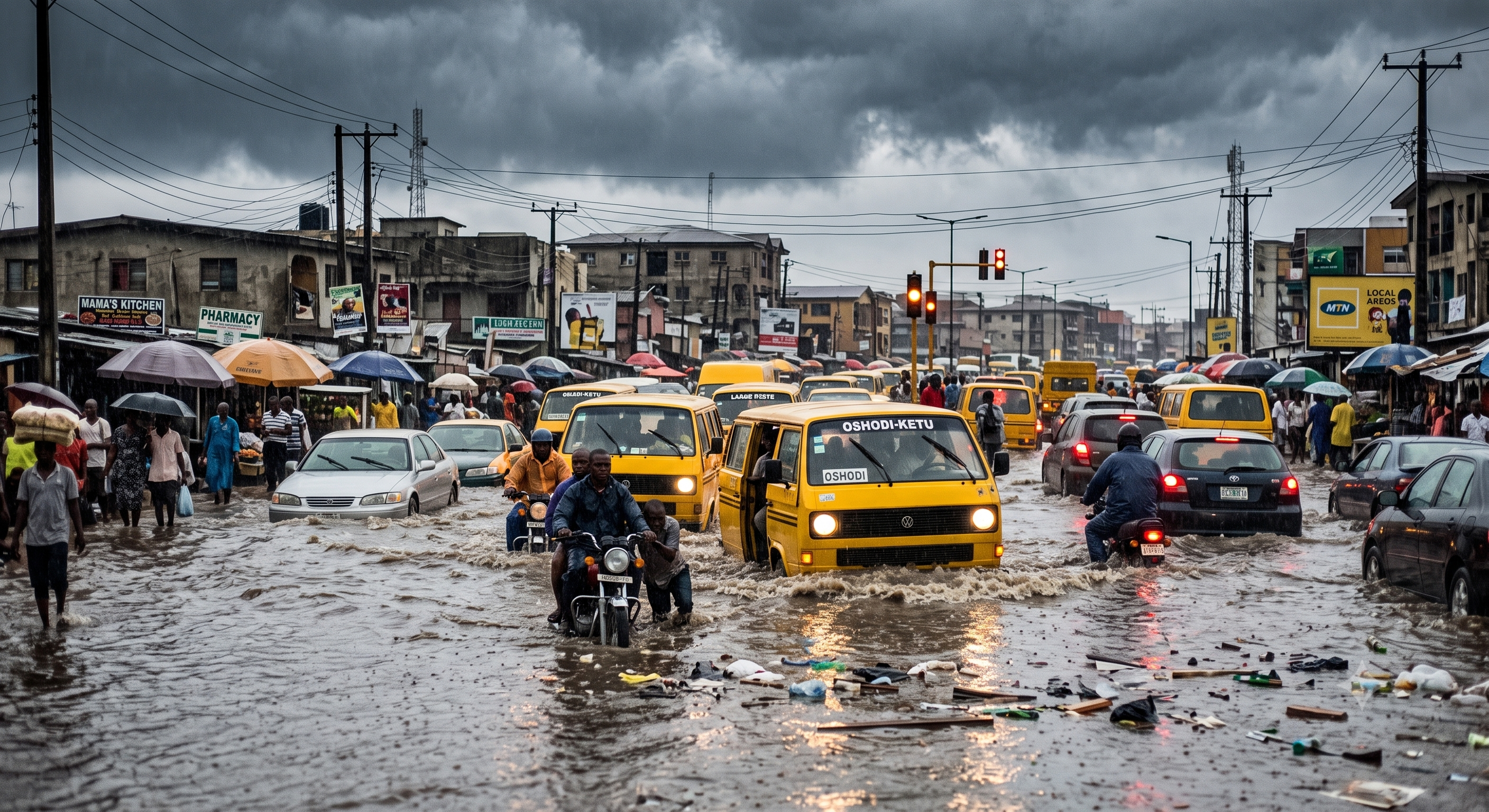
If you were in Lagos on Sunday June 29, 2026, you already know.
Streets became rivers. Motorists abandoned their vehicles. Residents resorted to staying doors and having to walk through the flooded neighbourhoods. It was, by most accounts, one of the worst single-day flooding episodes the city has seen in recent years and according to the agencies monitoring Lagos weather, it was only the beginning.
The Nigeria Hydrological Services Agency, the Nigerian Meteorological Agency, and the National Emergency Management Agency have all identified July through September as the period of greatest flood risk for Lagos in 2026. If you drive in this city, this guide is worth bookmarking now.
Why 2026 Is Worse Than Usual
Heavy rainfall has left major roads underwater, homes damaged, businesses shut, and thousands of commuters stranded across different parts of the state. Many residents say the situation has become worse than in previous years.
There are specific reasons for this. Instead of steady rain spread over several hours, Lagos has experienced downpours that overwhelm drainage systems within minutes. Add blocked drains, rapid urbanisation, and rising Atlantic sea levels preventing stormwater from emptying into the lagoon, and you have a city that is structurally more vulnerable to flooding than it has ever been.
Despite receiving more than ₦1.25 billion in ecological fund allocations between January and May 2026, Lagos State has continued to experience severe flooding. The infrastructure problem is real and it is not going away this season.
The Roads That Flood First and Worst
Based on the June 29 flooding and historical patterns, these are the areas to watch most carefully:
Lekki-Epe Expressway and environs One of the most consistently affected corridors in Lagos during heavy rain. The Lekki-Epe Expressway and environs were among the areas most heavily flooded during the June 29 downpour. The combination of low-lying terrain, high traffic volume, and drainage pressure along this axis makes it one of the first roads to become impassable after sustained rain.
Victoria Island Victoria Island was among the worst-hit areas during the June flooding. Despite being one of Lagos' premium addresses, VI sits at sea level and has limited drainage capacity relative to the volume of water it receives. During heavy rain, Ozumba Mbadiwe, Ahmadu Bello Way, and the Eko Hotel axis are particularly vulnerable.
Oshodi and Lagos-Oshodi Expressway The Lagos-Oshodi Expressway and Abeokuta Expressway by Oshodi bus stop were among the areas most heavily flooded. This corridor handles some of the highest traffic volumes in the city and floods quickly because of overwhelmed drainage channels beneath the expressway.
Gbagada Among the worst-hit areas were sections of Gbagada, where rising water levels rendered roads impassable. Gbagada's low-lying residential streets are particularly susceptible, and the flooding here tends to persist longer than other areas because drainage flow is slow.
Ojota to Maryland bridge As of 11am on June 30, the flood had taken over the bridge linking Ojota to Maryland along Ikorodu Road, leaving vehicles stranded in the flood. This is one of the most critical arteries connecting the mainland — when it floods, the ripple effect on traffic across the entire city is severe.
Surulere, Funsho Williams Avenue, and Yaba Funsho Williams Avenue, the Iwaya area of Yaba, and surrounding parts of Lagos Mainland flood regularly during peak rainy season. The Yaba axis in particular sits in a depression that collects water from multiple directions.
Agungi, Ajiran, and Chevron Drive (Lekki) The Lagos State Government recently ordered the demolition of illegal structures obstructing drainage channels and canal rights of way in Agungi, Ajiran and Ikota to restore the free flow of stormwater. Until that drainage work is complete, these areas remain among the most flood-prone on the island.
Areas flagged by NEMA for flash flooding NEMA's Lagos Territorial Office separately identified Badagry, Epe, Alimosho, Ikeja, and Surulere as flash flood zones, while warning that Ikorodu and Isheri remained vulnerable to rising water levels linked to possible releases from the Oyan Dam during the July-to-October period.
Practical Rules for Driving in Flooded Lagos
Rule 1: Never drive into water you cannot measure. If you cannot see the road surface beneath the water, you do not know the depth. What looks like 15cm can be 80cm around a pothole or a sunken drain cover. A single decision to "push through" has written off countless engines in Lagos.
Rule 2: Turn around — always. No meeting, no event, no delivery is worth a flooded engine. If the road ahead is submerged, find an alternative route or wait. The turnaround decision is always cheaper than the repair bill.
Rule 3: Switch off your engine immediately if water enters the cabin. Do not restart it. A waterlogged engine that is restarted even once can suffer damage that costs more to fix than the car is worth.
Rule 4: Check your route before you leave. Twitter/X is your best real-time source for Lagos flood updates. Search the road name before you set off. Lagosians report flooding faster than any official channel.
Rule 5: Travel in a high-clearance vehicle when you can. This is not a small point. Ground clearance is the single biggest mechanical advantage during Lagos rainy season. A low-clearance saloon car that stalls in 40cm of water will be passed by a well-maintained SUV travelling through the same water without incident.
The Ground Clearance Advantage
The difference between a sedan and a full-size SUV on a flooded Lagos road is not a matter of preference, it is a matter of physics. Executive sedans typically sit at 130mm to 160mm of ground clearance. A Toyota Prado sits at 218mm. A Land Cruiser at 225mm. On a flooded Lekki expressway, that difference is the difference between making it through and abandoning your car in the rain.
For any critical journey this July through September — airport runs, client pickups, corporate events, family travel — an SUV is not a luxury choice. It is the rational one.
Our fleet of high-clearance SUVs is available for daily hire, airport transfers, and full-period rentals throughout the rainy season. Book the vehicle that gives you the best chance of getting through — whatever the roads look like.
[Book an SUV for the rainy season at muvment.ng →]
FAQs
Which part of Lagos floods the most? Based on 2026 flooding patterns, the consistently worst-affected areas are the Lekki-Epe Expressway corridor, Victoria Island, Oshodi, Gbagada, the Ojota-Maryland axis on Ikorodu Road, and the Agungi-Ajiran area in Lekki. The Island is generally more vulnerable than the Mainland due to its coastal position and sea-level terrain.
When does Lagos flooding peak in 2026? Meteorological agencies have identified July through September 2026 as the period of greatest flood risk. The June 29 flooding was a warning sign of what the peak season may bring.
What should I do if my car gets flooded? Do not restart the engine. Move to safety, then call a mechanic before attempting to drive the vehicle again. Even if the car appears unaffected, have the engine oil, air filter, and electrical system checked before driving.
Is it safe to drive in Lagos during the rainy season? Yes, with preparation. Avoid the roads and times listed in this guide during and immediately after heavy rain, travel in a high-clearance vehicle where possible, and always check real-time traffic and flood updates on X before setting off.
What is the safest type of car for Lagos rainy season? A high-clearance SUV with a well-maintained engine and sealed electrical systems. Toyota Prado, Land Cruiser, Lexus GX, and similar models handle flooded roads significantly better than low-clearance sedans or small crossovers.
Comments (0)
Be the first to make a comment
Comments are reviewed before they appear.